PUSHING FORWARD IN A CHANGING WORLD!
The end of 2025 certainly leaves us wondering what the next chapter will bring in the 32-year story that is LBD Coffee. While our oldest Kapahi Bourbon turned seven years old in November, our coffee orchard, which was entirely cut down to the stump to thwart the coffee berry borer life cycle, has grown back with renewed strength. The COVID-era chocolate planting of 2020 exploded in production as the orchard turned five, while an old-world cigar seed showed promising signs for a unique 2026 crop of leaf. Still, looming in the background is a definite concern regarding tariffs and what impact these massive additional costs will have on our business and on our loyal customers’ wallets. Let us recap the year as we continue to be grateful for everything the farms have provided us over the past three decades.
Kauaʻi Distilling Company
We started this project as more of a side hustle to the cigar and coffee business, but the Kapahi Bourbon is coming of age and impressing even the most discerning whisky connoisseurs. Back in 2018, we put away our first 53-gallon barrels for long aging and launched the business with smaller 5-, 10-, 15-, and 30-gallon barrels. While the small barrels were fun, enlightening, and helpful for getting the brand off the ground, we have realized over time that mature, great tasting bourbon aged in full size casks takes years – many of them – before it becomes the exceptional and classic American spirit it is meant to be.
Much like cigar tobacco leaf that is fermented and aged for many years, bourbon will tell you when it is ready to be enjoyed and the long wait is worth it. With seven years of aging behind us, we are entering the most rewarding period of growth for this product. Seeing our six-year Kapahi Bourbon on shelves in Hawaiʻi in 2025 and having it available by mail order in 43 other states has been exciting. But none of this would have the same meaning without our loyal customers who are scattered across the mainland USA. Our bourbon, coffee, chocolate, and cigars all share one purpose. They are intended to be enjoyed socially and among friends. When those moments are paired with premium Hawaiʻi grown products, we feel a deep sense of reward at LBD.
While the bourbon market contributes to our growth, the business is not without challenges. After many years in operation, our most recent corn grower, Hartung Brothers, closed their Kauaʻi operations in 2025, raising serious concerns about our future supply chain. The uncertainty led us to consider outsourcing corn production to Oʻahu or Molokaʻi, two islands that grow corn commercially. However, with this closure came a new opportunity. Pacific Biodiesel recently began agricultural operations on Kauaʻi. While primarily growing sunflowers for culinary oils, they are also producing feed corn for animal and human consumption. A natural fit for our bourbon production, we are preparing to purchase Kauaʻi grown corn from their 2026 harvest and we are grateful for this new partnership.

Blair Estate Coffee
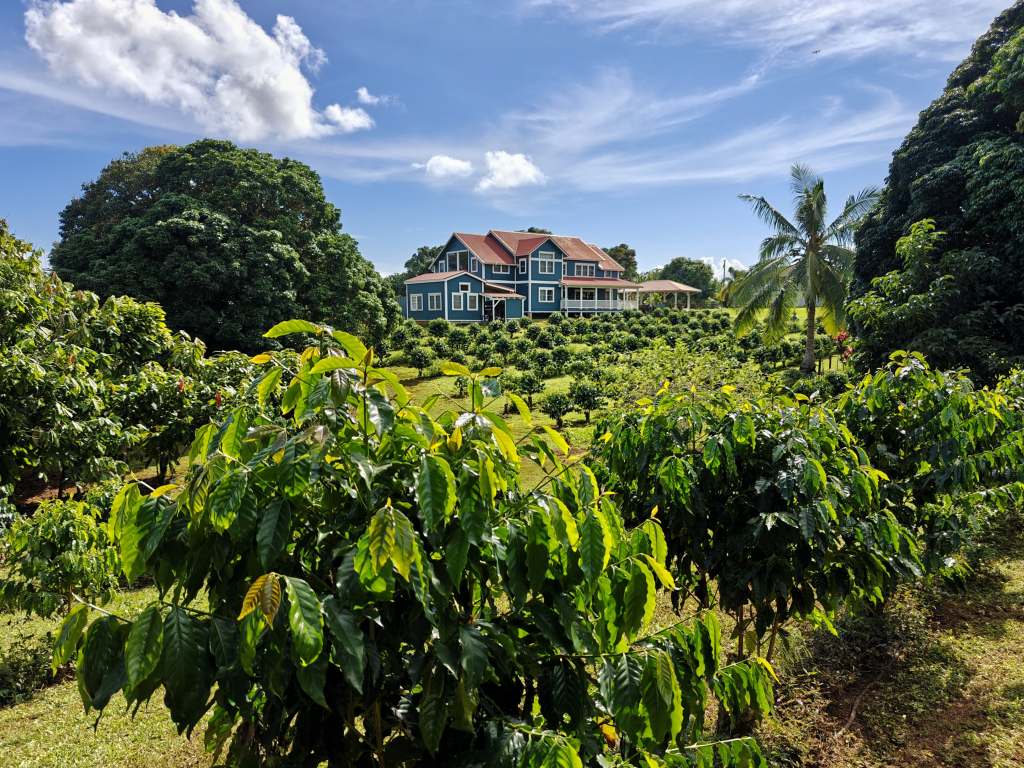
As we reported a year ago, the coffee berry borer (CBB) was finally discovered on our Kauaʻi farm. To combat this pest, which was first discovered in Kona on Hawaiʻi Island in 2010 and later in Kauaʻi in 2020, we chose to stump our entire orchard and remove the beetle’s food source, the coffee cherry, for two years in hopes of controlling its growth, if not eradicating it entirely. We are now one year into the orchard’s regrowth and expect to harvest a small amount of coffee again in the fall of 2026.
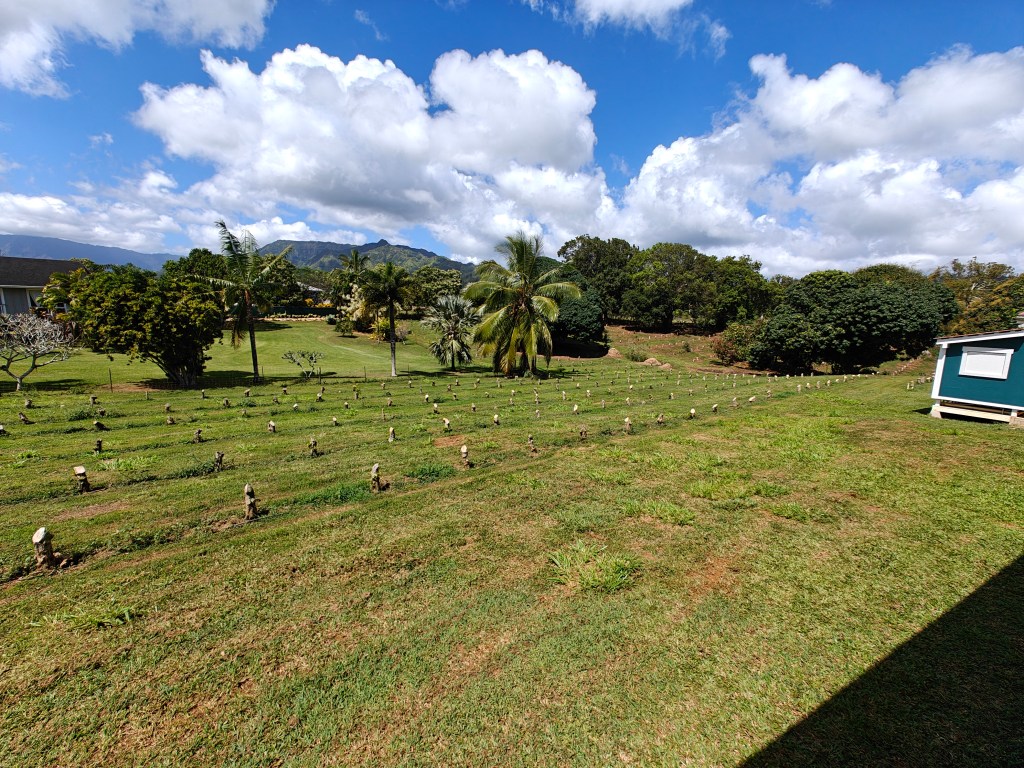


While a stumped orchard may look radical and desolate, cutting trees down to 24 inches above the ground serves more than one purpose. It keeps vertical growth manageable during harvest and, most importantly, creates a fallow period that starves out the CBB and breaks its life cycle. Our previous pruning cycle split the orchard in two so that one half would regrow while the other produced, with a third year of full production. The new plan is to remove the beetle’s food source every three years after one large harvest followed by two years of dormancy. Because our farm is isolated from other commercial coffee growers, we are hopeful this strategy will be effective. In regions such as the famed Kona coffee belt on Hawaiʻi Island, which is comprised of hundreds of small farms, such a strategy would be nearly impossible. The beetles can easily travel from orchard to orchard. Transport from groves to mills also aids in their spread.
As we noted in 2024, coffee leaf rust, first discovered on Hawaiʻi Island in October 2020, has not reached our Kauaʻi farm. We hope that our new pruning cycle will also help prevent this devastating fungal pathogen at Blair Estate.
Blair Estate Chocolate
Our COVID-era chocolate planting is now paying dividends in a significant way. This orchard, located just a couple of miles from our Blair Estate coffee farm, is entering the peak production stage of its life. With this abundance of cacao, we have been experimenting with new formulations and recipes to expand beyond our 70 percent dark chocolate bar. Red salt, vanilla, and tropical fruit flavors are all in development as we continue to research and refine these offerings.

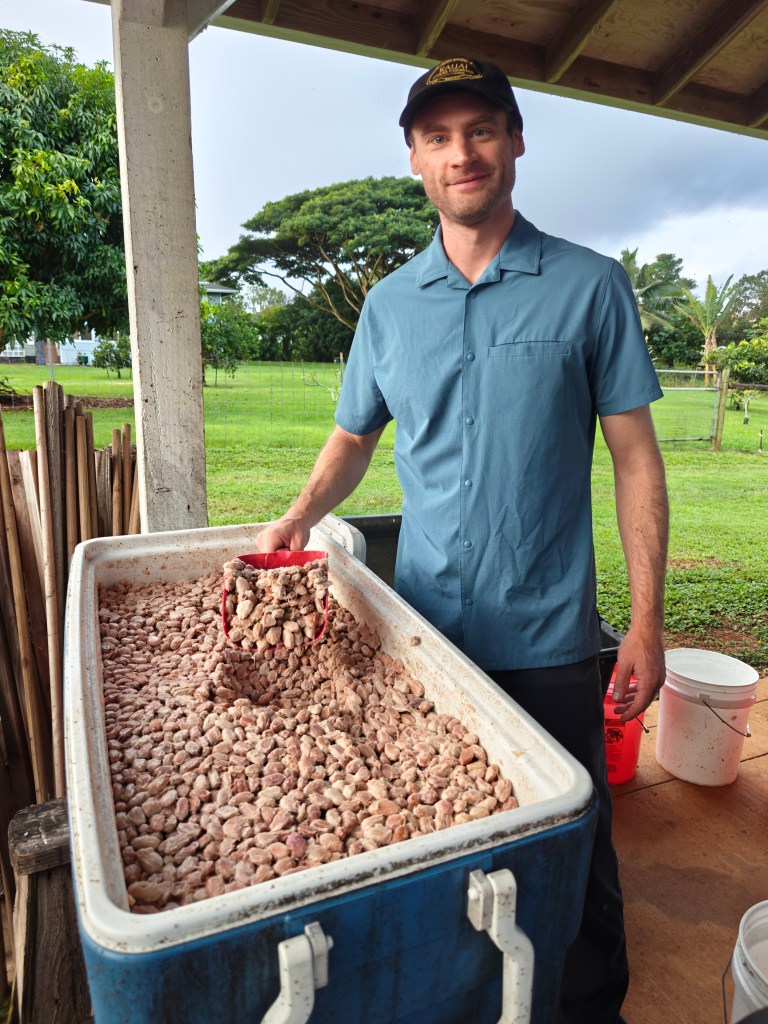
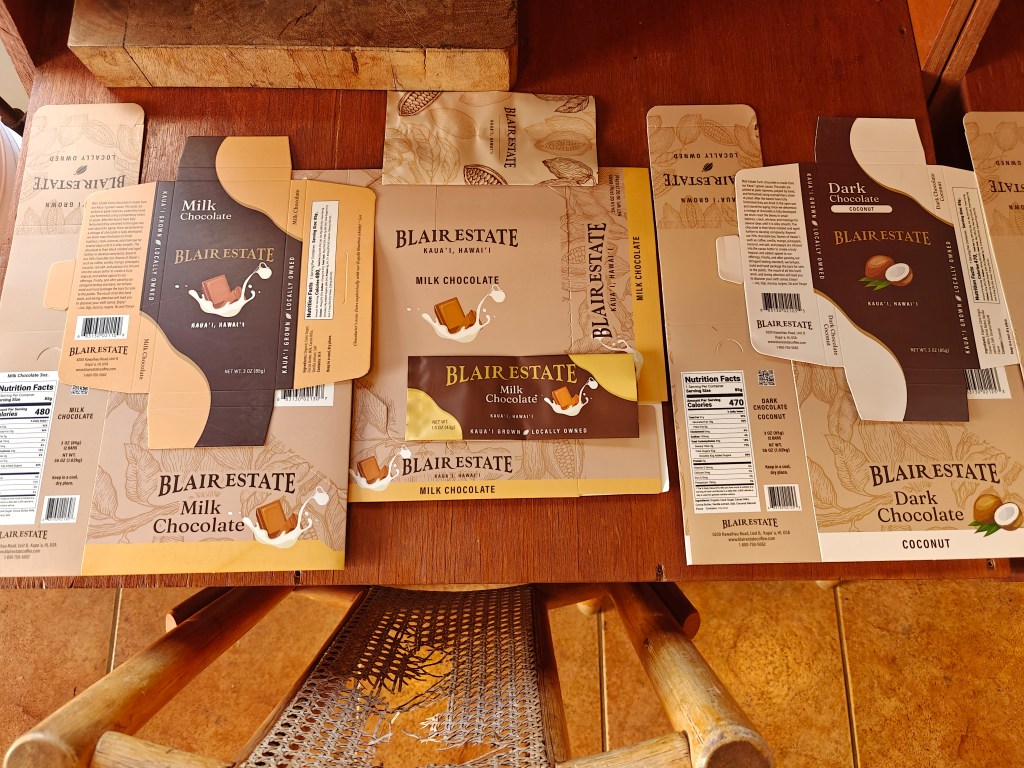
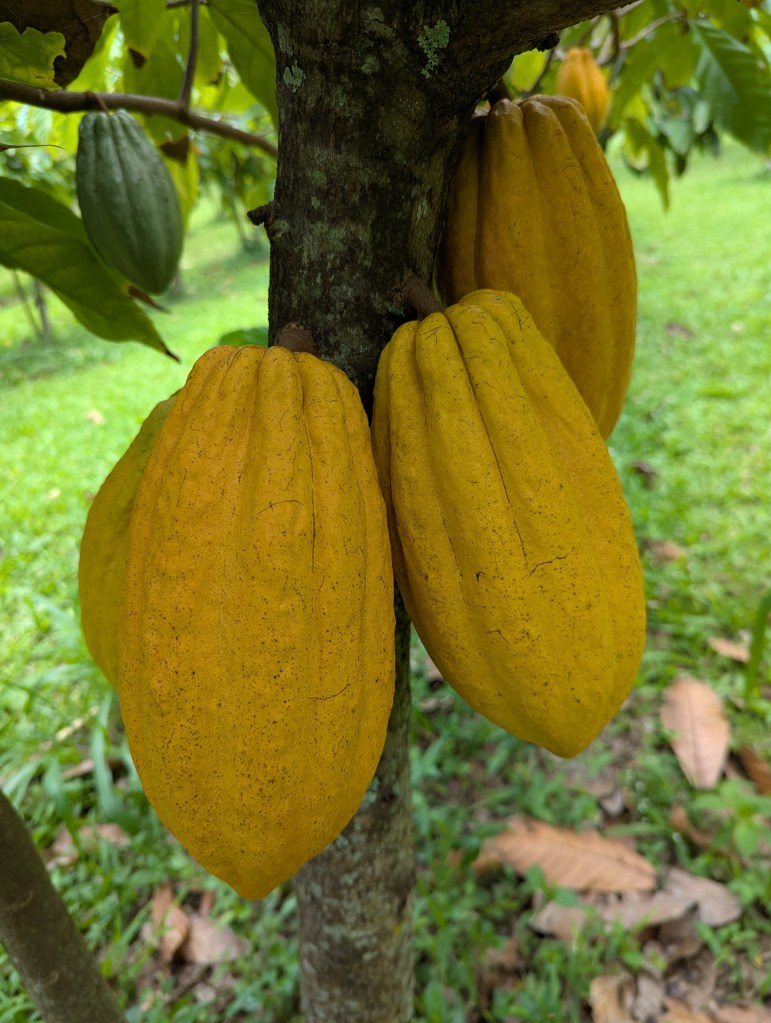

Another benefit of having so much cacao is the ability to naturally ferment our beans. In the past, we relied on artificial heating and yeast to induce fermentation. Now, with harvests of at least 100 pounds of beans, the mass is large enough to heat and ferment naturally. The only work required is turning and aerating the beans every couple of days. After a week of fermentation, the beans are ready to be sun dried and stored for aging before becoming Blair Estate chocolate bars.
Coffee Times 100 percent Kona Coffee
After years of rising Kona coffee prices due to challenges from CBB and coffee rust, the industry has stabilized but now faces a new threat. Immigration enforcement is making it difficult to find workers to pick the roughly 25 million pounds of coffee cherry harvested annually. Pickers are typically paid by the pound, and it remains to be seen how this shrinking labor pool will affect 2026 prices. Harvest occurs from September through early winter. What will remain constant is the exceptional quality of this famed coffee, which continues to be among the world’s finest.
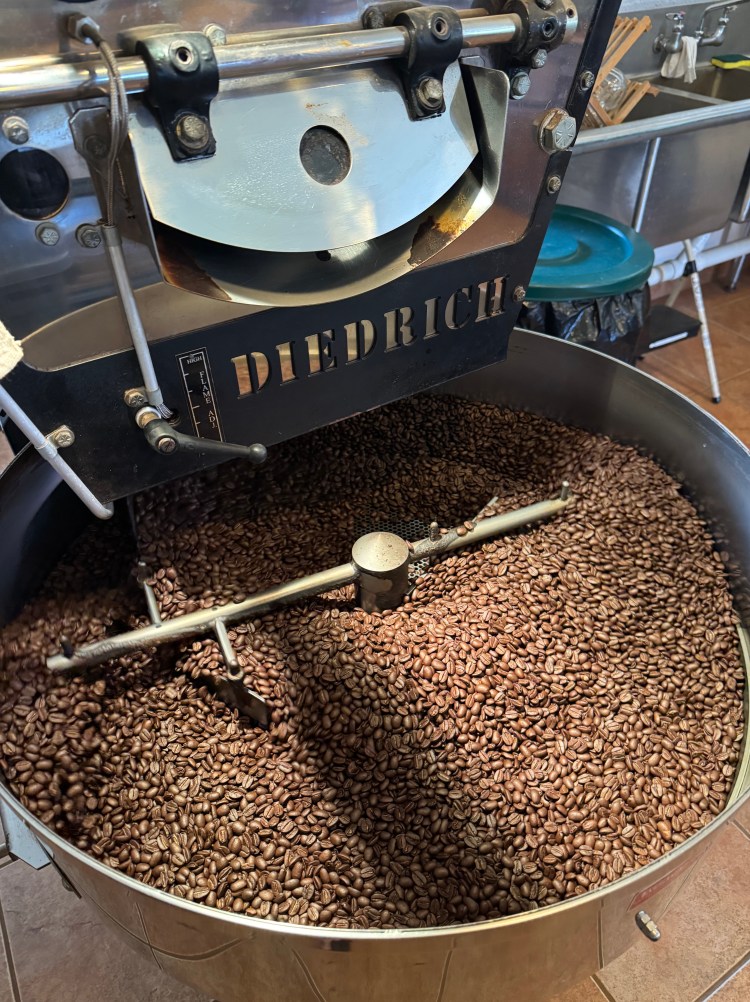
For 32 years, Coffee Times has been fresh roasting 100 percent Kona coffee. We are proud to have been among the first to mail order Kona coffee from Hawaiʻi Island and it continues to be the foundation of our business.
Kauaʻi Cigar
Perhaps the largest hurdle we have faced since launching Kauaʻi Cigar in 2006 is the threat of Nicaragua’s suspension from CAFTA or the possibility of the current 18 percent tariff increasing to 100 percent because of decisions by the United States Trade Representative. Our partners in Nicaragua do not deserve this treatment. The industry in Estelí supplies roughly 65 percent of the world’s premium cigars and provides livable wages to the people who work on the farms and in the factories. Without these valued partners, Kauaʻi Cigar would not be possible and the livelihoods of those in this storied region would be jeopardized. Many of these employees feel like extended family to us and we hope they do not become collateral damage in any USTR actions.
December 10, 2025 UPDATE- Premium cigars will not be subject to additional tariffs as a result of USTR policy action! Read more here.
Locally, we have begun growing two varieties of tobacco with long and distinguished histories in the cigar world. A Cuban seed variety from the 1930s, preserved in one of the world’s few remaining tobacco seed banks, has been with us since 2004. After studying its agronomy, we have decided to resurrect it, along with a wild cigar tobacco variety that has grown on Kauaʻi since the 1850s.


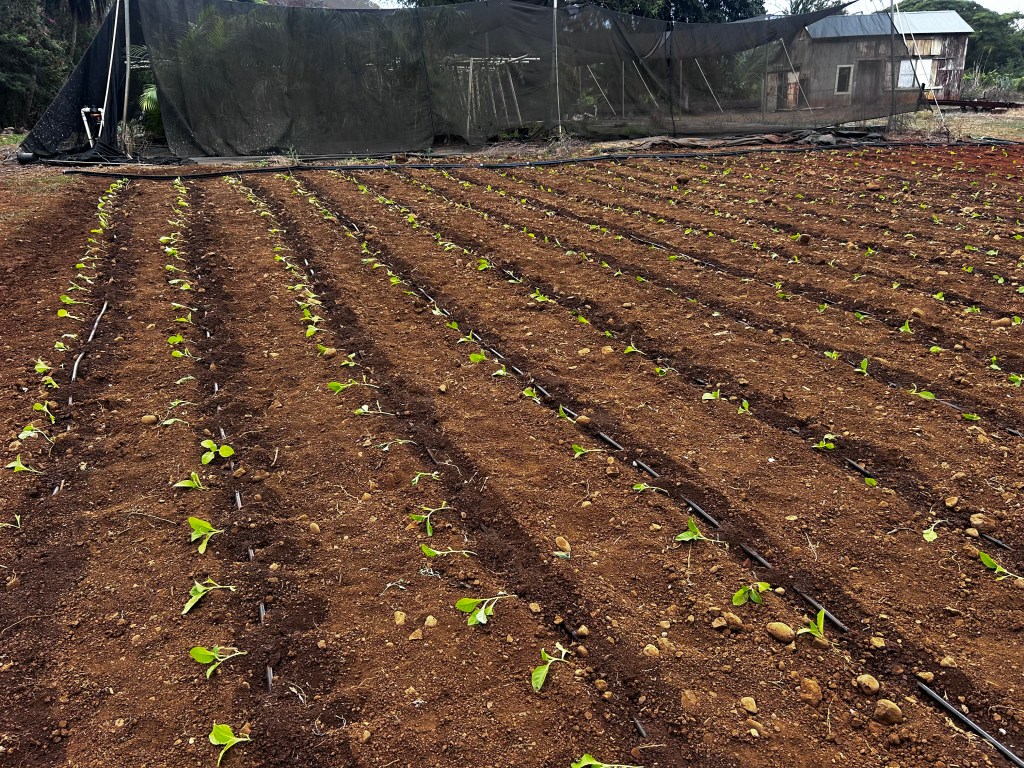
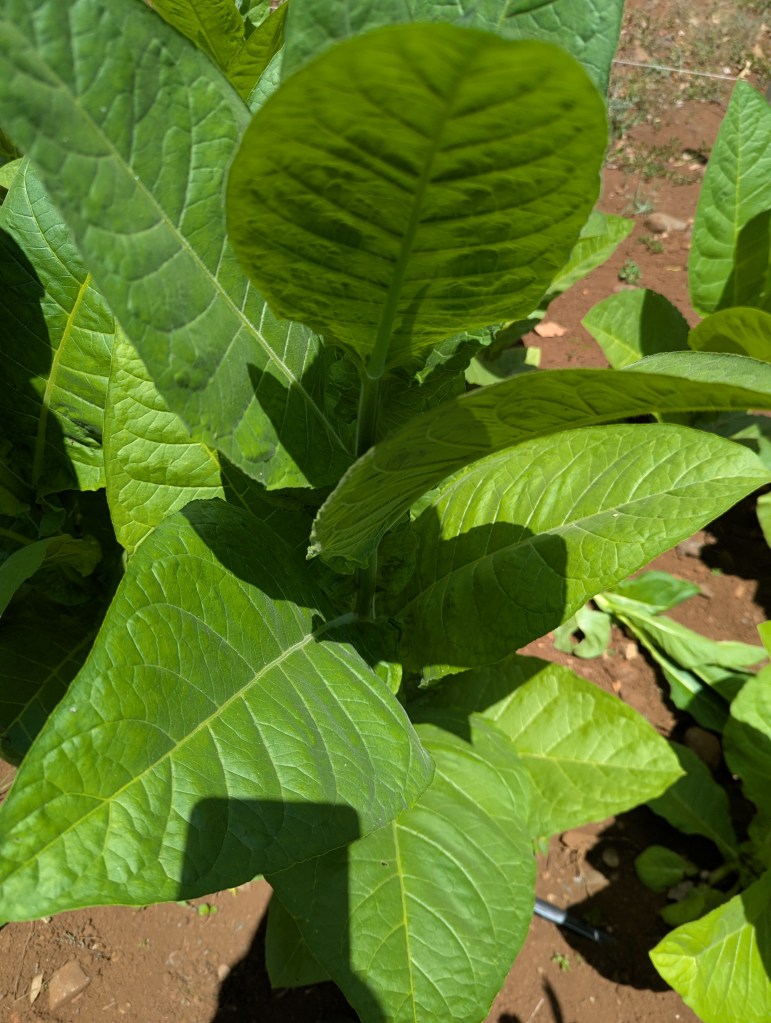
It should be noted that tariffs overall are taking a toll on our business and many others. While we grow and produce our value-added agricultural products on Kauaʻi, we remain tied to a global supply chain that supports all our brands. Whether it is the glass bottles that hold our Kapahi Bourbon, the cigar manufacturing that transforms our Kauaʻi tobacco leaves into fine cigars, or the packaging for our Blair Estate chocolate and coffee, we rely heavily on international partners. We value our relationships with producers in China, Mexico, and Nicaragua. We remain committed to providing exceptional Kauaʻi-grown products, even as global costs fluctuate.
Thank you for continuing to join us on this journey and we wish everyone the very best in 2026.
Happy Holidays.
Les, Gigi, Jessica, Jorgen, Tai, Trevyn, Lei, Don, and Harumi
 LBD COFFEE, LLC